step_log_skewness() creates a specification of a recipe step that will log
transform numeric variables if the skewness exceeds a given threshold.
Arguments
- recipe
A recipe object. The step will be added to the sequence of operations for this recipe.
- ...
One or more selector functions to choose variables for this step. See
recipes::selections()for more details.- role
Not used by this step since no new variables are created.
- trained
A logical to indicate if the quantities for preprocessing have been estimated.
- skewness
Numeric threshold for the skewness. If the skewness of a variable exceeds this threshold, it will be log-transformed. Otherwise, it will remain as-is. If
NULL, all selected numeric variables will be transformed.- base
A numeric value for the base.
- offset
An optional value to add to the data prior to logging (to avoid
log(0)).- columns
A character vector of the variable names that are log-transformed. This field is a placeholder and will be populated once
recipes::prep()is used.- skip
A logical. Should the step be skipped when the recipe is baked by
recipes::bake()? While all operations are baked whenrecipes::prep()is run, some operations may not be able to be conducted on new data (e.g. processing the outcome variable(s)). Care should be taken when usingskip = TRUEas it may affect the computations for subsequent operations.- id
A character string that is unique to this step to identify it.
Value
An updated version of recipe with the new step added to the
sequence of any existing operations.
Tidying
When you tidy() this step, a tibble is returned with
columns terms, base , and id:
- terms
character, the selectors or variables selected
- base
numeric, value for the base
- id
character, id of this step
Author
Modified from recipes::step_log().
Examples
set.seed(313)
examples <- matrix(exp(rnorm(40)), ncol = 2)
examples <- as.data.frame(examples)
rec <- recipes::recipe(~ V1 + V2, data = examples)
log_trans <- rec |>
step_log_skewness(recipes::all_numeric_predictors(), skewness = 1)
log_obj <- recipes::prep(log_trans, training = examples)
transformed_te <- recipes::bake(log_obj, examples)
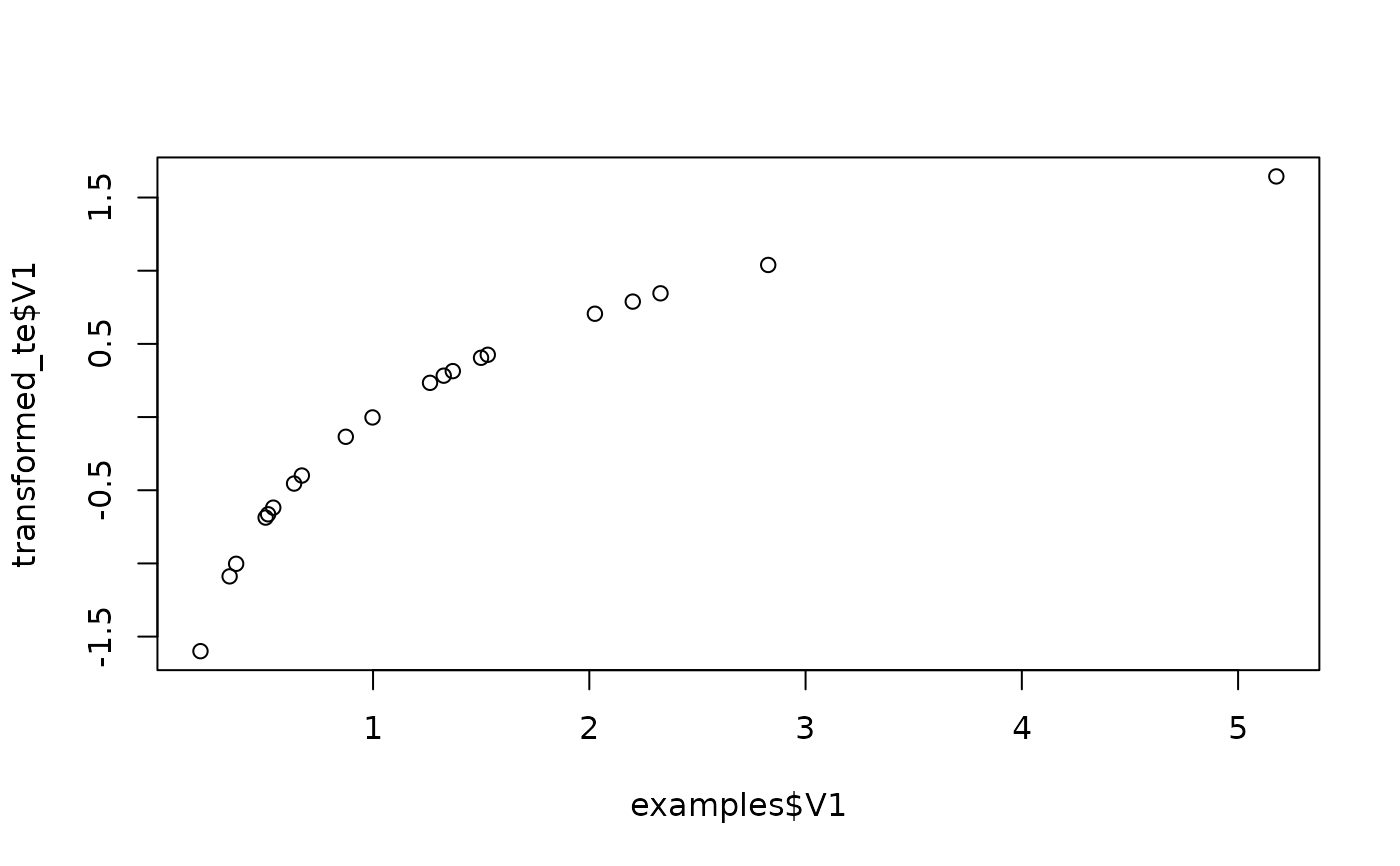
plot(examples$V1, transformed_te$V1)
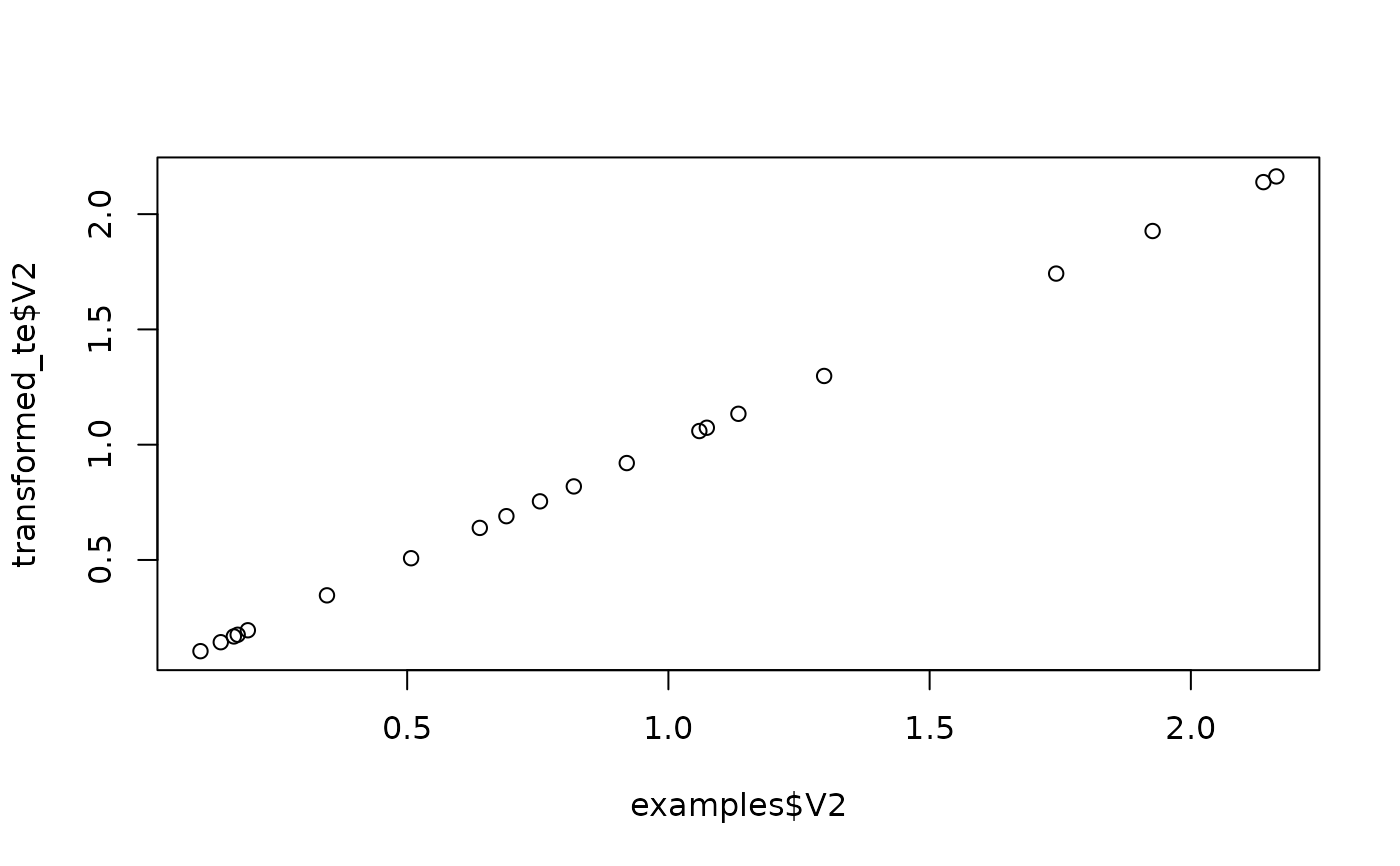
 plot(examples$V2, transformed_te$V2)